Tuesday, 16 October 2018

Pharmacology Made Simple : Antihypertensives : Enalapril

Enalapril

Join our facebook page for discussions and further good quality learning :
https://www.facebook.com/groups/405813783372378/


Enalapril,is a medication that belongs to the angiotensin-converting-enzyme inhibitor (ACEi) family of medications. used to treat high blood pressure, diabetic kidney disease, and heart failure.

For heart failure it is generally used with a diuretic such as furosemide.

Image result for enalapril mechanism of action images

Mechanism of action


Normally, angiotensin I is converted to angiotensin II by an angiotensin-converting enzyme (ACE). Angiotensin II constricts blood vessels, increasing blood pressure.

Enalaprilat, the active metabolite of enalapril, inhibits ACE. Inhibition of ACE decreases levels of angiotensin II leading to less vasoconstriction and decreased blood pressure.

Image result for enalapril mechanism of action images

Pharmacokinetics

Pharmacokinetic data of enalapril:

Onset of action: about 1 hour
Peak effect: 4–6 hours
Duration: 12–24 hours
Absorption: ~60%
Metabolism: prodrug, undergoes biotransformation to enalaprilat.

Image result for enalapril mechanism of action images

Route of administration :

It is given by mouth or injection into a vein.

Onset of effects are typically within an hour when taken by mouth and last for up to day.

Medical uses

Enalapril is used to treat hypertension, symptomatic heart failure, and asymptomatic left ventricular dysfunction.

It has been proven to protect the function of the kidneys in hypertension, heart failure, and diabetes, and may be used in the absence of hypertension for its kidney protective effects.

It is widely used in chronic kidney failure.

Furthermore, enalapril is an emerging treatment for psychogenic polydipsia.

A double-blind, placebo-controlled trial showed that when used for this purpose, enalapril led to decreased water consumption (determined by urine output and osmality) in 60% of patients.

Image result for enalapril mechanism of action images

.
Side effects

Common side effects include headache, tiredness, lightheadedness with standing, and cough.

Serious side effects include angioedema and low blood pressure.

Use during pregnancy is believed to result in harm to the baby.

The most common side effects of enalapril include increased serum creatinine (20%), dizziness (2–8%), low blood pressure (1–7%), syncope (2%), and dry cough (1–2%).

The most serious common adverse event is angioedema (swelling) (0.68%) which often affects the face and lips, endangering the patient’s airway.

Angioedema can occur at any point during treatment with enalapril, but is most common after the first few doses.

.


Enalaprilat was developed partly to overcome these limitations of captopril. The sulfhydryl moiety was replaced by a carboxylate moiety, but additional modifications were required in its structure-based design to achieve a potency similar to captopril. Enalaprilat, however, had a problem of its own in that it had poor oral availability. This was overcome by the researchers at Merck by the esterification of enalaprilat with ethanol to produce enalapril.


Wednesday, 19 September 2018

Pharmacology Made Simple : Medications used in treatment of Heart Failure : Nebivolol


Nebivolol:

Join our facebook page for discussions and further good quality learning :
https://www.facebook.com/groups/405813783372378/


Nebivolol is a β1 receptor blocker with nitric oxide-potentiating vasodilatory effect used in treatment of hypertension and also for left ventricular failure.

It is highly cardioselective under certain circumstances.

Image result for nebivolol images mechanism


β1-selectivity

Beta blockers help patients with cardiovascular disease by blocking β receptors, while many of the side-effects of these medications are caused by their blockade of β2 receptors.

For this reason, beta blockers that selectively block β1 adrenergic receptors (termed cardioselective or β1-selective beta blockers) produce fewer adverse effects (for instance, bronchoconstriction) than those drugs that non-selectively block both β1 and β2 receptors.

Related image

In a laboratory experiment conducted on biopsied heart tissue, nebivolol proved to be the most β1-selective of the β-blockers tested, being approximately 3.5 times more β1-selective than bisoprolol.

However, the drug's receptor selectivity in humans is more complex and depends on the drug dose and the genetic profile of the patient taking the medication.

Image result for nebivolol images mechanism

The drug is highly cardioselective at 5 mg.In addition, at doses above 10 mg, nebivolol loses its cardioselectivity and blocks both β1 and β2 receptors.

While the recommended starting dose of nebivolol is 5 mg, sufficient control of blood pressure may require doses up to 40 mg).

Furthermore, nebivolol is also not cardioselective when taken by patients with a genetic makeup that makes them "poor metabolizers" of nebivolol (and other drugs) or with CYP2D6 inhibitors.

As many as 1 in 10 whites and even more blacks are poor CYP2D6 metabolizers and therefore might benefit less from nebivolol's cardioselectivity although currently there are no directly comparable studies.

Vasodilator action :

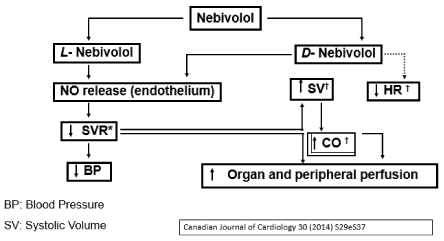
Nebivolol is unique as a beta-blocker.Unlike carvedilol, it has a nitric oxide (NO)-potentiating, vasodilatory effect via stimulation of β3 receptors.Along with labetalol, celiprolol and carvedilol, it is one of four beta blockers to cause dilation of blood vessels in addition to effects on the heart.

Antihypertensive effect :

Nebivolol lowers blood pressure (BP) by reducing peripheral vascular resistance, and significantly increases stroke volume with preservation of cardiac output.

The net hemodynamic effect of nebivolol is the result of a balance between the depressant effects of beta-blockade and an action that maintains cardiac output.


Pharmacology of side-effects :

Several studies have suggested that nebivolol has reduced typical beta-blocker-related side effects, such as fatigue, clinical depression, bradycardia, or impotence.However, according to the FDA.

Image result for nebivolol images mechanism

Contraindications:

Nebivolol is contraindicated in patients with severe bradycardia, heart block greater than first degree, cardiogenic shock, decompensated cardiac failure, sick sinus syndrome (unless a permanent pacemaker is in place), severe hepatic impairment (Child-Pugh > B) and in patients who are hypersensitive to any component of the product.

Nebivolol is also associated with warnings regarding abrupt cessation of therapy, cardiac failure, angina and acute myocardial infarction, bronchospastic diseases, anesthesia and major surgery, diabetes and hypoglycemia, thyrotoxicosis, peripheral vascular disease, non-dihydropyridine calcium channel blockers use, as well as precautions regarding use with CYP2D6 inhibitors, impaired renal and hepatic function, and anaphylactic reactions.


Contraindications Summay :

Severe bradycardia
Heart block greater than first degree
Patients with cardiogenic shock
Decompensated cardiac failure
Sick sinus syndrome (unless a permanent pacemaker is in place)
Patients with severe hepatic impairment (Child-Pugh class B)
Patients who are hypersensitive to any component of this product.

Image result for nebivolol images mechanism
Adverse drug reactions


Headache
Paresthesia
Dizziness
History

Image result for nebivolol images mechanism

Friday, 7 September 2018

Pharmacology Made Simle : Antihypertensives : Amlodipine

Join our facebook page for discussions and further good quality learning :
https://www.facebook.com/groups/405813783372378/

Amlodipine

Mechanism of action :

Amlodipine is an angioselective calcium channel blocker and inhibits the movement of calcium ions into vascular smooth muscle cells and cardiac muscle cells which inhibits the contraction of cardiac muscle and vascular smooth muscle cells.
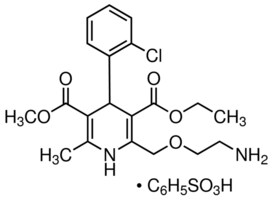
Image result for amlodipine images


Amlodipine inhibits calcium ion influx across cell membranes, with a greater effect on vascular smooth muscle cells. This causes vasodilation and a reduction in peripheral vascular resistance, thus lowering blood pressure. Its effects on cardiac muscle also prevent excessive constriction in the coronary arteries
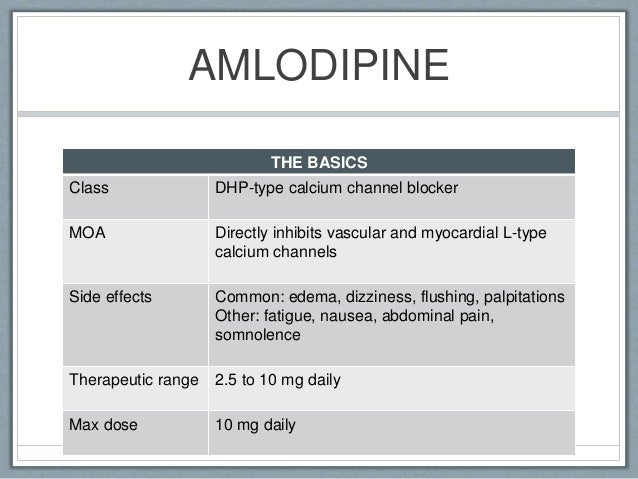
Image result for amlodipine images

The mechanisms by which amlodipine relieves angina are:

Stable angina:

Amlodipine reduces the total peripheral resistance (afterload) against which the heart works and reduces the rate pressure product, thereby lowering myocardial oxygen demand, at any given level of exercise.

Variant Angina: 

Amlodipine blocks spasm of the coronary arteries and restores blood flow in coronary arteries and arterioles in response to calcium, potassium, epinephrine, serotonin, and thromboxane A2 analog in experimental animal models and in human coronary vessels in vitro.

Image result for amlodipine images

Pharmacokinetics

The nitrogen-containing ring is oxidized, and two of the side chains are hydrolyzed.

Amlodipine is well absorbed by the oral route with a mean oral bioavailability around 60%; the half-life of amlodipine is about 30 h to 50 h, and steady-state plasma concentrations are achieved after 7 to 8 days of daily dosing.
Its long half-life and high bioavailability are largely in part of its high pKa (8.6); it is ionized at physiological pH, and thus can strongly attract proteins.

Image result for amlodipine images


Side effects :

Some common dose-dependent side effects of amolodipine include vasodilatory effects, peripheral edema, dizziness, palpitations, and flushing.

Peripheral edema (fluid accumulation in the tissues) occurs at rate of 10.8% at a 10-mg dose (versus 0.6% for placebos), and is three times more likely in women than in men.

It causes more dilation in the arterioles and precapillary vessels than the postcapillary vessels and venules.

The increased dilation allows for more blood, which is unable to push through to the relatively constricted postcapillary venules and vessels; the pressure causes much of the plasma to move into the interstitial space.

Amlodipine-association edema can be avoided by adding ACE inhibitors or angiontensin II receptor antagonist.

Common but not dose-related side effects are fatigue , nausea , abdominal pain , and somnolence.

Side effects occurring less than 1% of the time include: blood disorders, impotence, depression, peripheral neuropathy, insomnia, tachycardia, gingival enlargement, hepatitis, and jaundice.

Image result for amlodipine images

Overdose

Amlodipine overdose toxicity can result in widening of blood vessels, severe low blood pressure, and fast heart rate.

Toxicity is generally managed with fluid replacement, monitoring ECG results, vital signs, respiratory system function, glucose levels, kidney function, electrolyte levels, and urine output.Vasopressors are also administered when low blood pressure is not alleviated by fluid resuscitation.
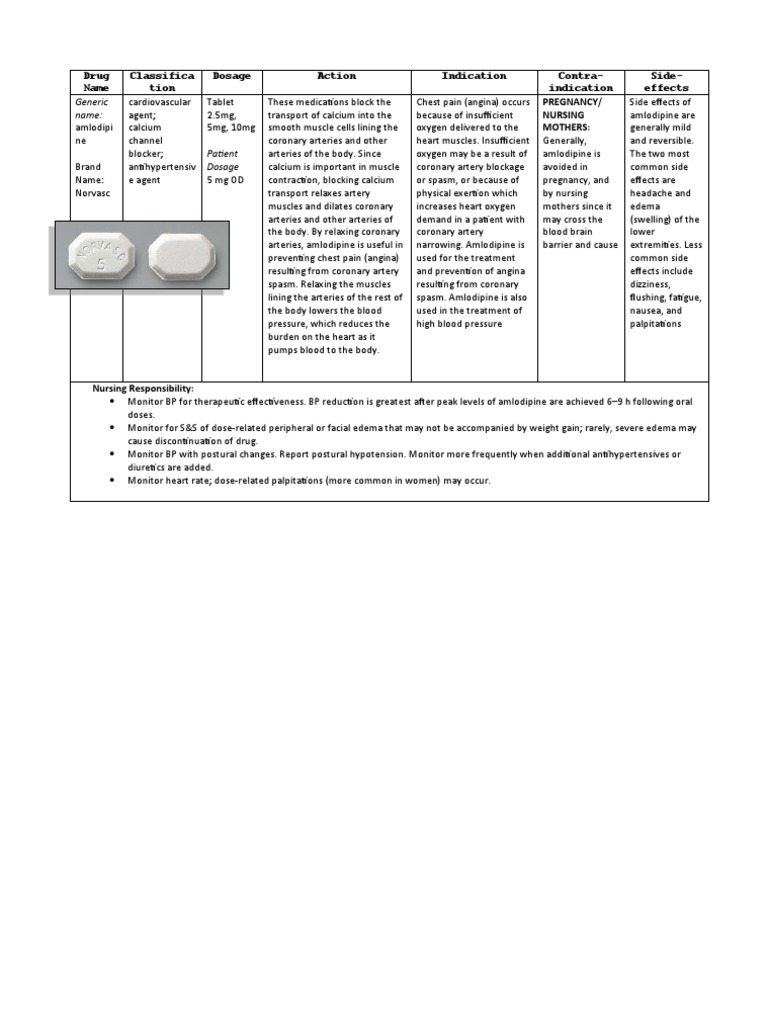
Image result for amlodipine images

Combination therapy

Amlodipine can be given as a combination therapy with a variety of medications:

Amlodipine/atorvastatin, where amlodipine is given for hypertension or CAD and atorvastatin prevents cardiovascular events, or if the person also has high cholesterol.

Amlodipine/aliskiren or amlodipine/aliskiren/hydrochlorothiazide if amlodipine alone cannot reduce blood pressure. Aliskiren is a renin inhibitor, which works to reduce primary hypertension (that with no known cause) by binding to renin and preventing it from initiating the renin–angiotensin system (RAAS) pathway to increase blood pressure.

Hydrochlorothiazide is a diuretic and decreases overall blood volume.

Amlodipine/benazepril if either drug has failed individually, or amlodipine alone caused edema. Benazepril is an ACE inhibitor and blocks the conversion of angiotensin I to angiotensin II in the RAAS pathway.

Amlodipine/olmesartan or amlodipine/olmesartan/hydrochlorothiazide if amlodipine is insufficient in reducing blood pressure. Olmesartan is an angiotensin II receptor antagonist and blocks part of the RAAS pathway.

Amlodipine/perindopril if using amlodipine alone caused edema. Perindopril is a long-lasting ACE inhibitor.
Amlodipine/telmisartan, where telmisartan is an angiotensin II receptor antagonist.
Amlodipine/valsartan or amlodipine/valsartan/hydrochlorothiazide, where valsartan is an angiotensin II receptor antagonist.

Contraindications

The only absolute contraindication to amlodipine is an allergy to amlodipine or any other dihydropyridines.

Other situations occur, however, where amlodipine generally should not be used.

In patients with cardiogenic shock, where the heart's ventricles are not able to pump enough blood, calcium channel blockers exacerbate the situation by preventing the flow of calcium ions into cardiac cells, which is required for the heart to pump.

While use in patients with aortic stenosis (narrowing of the aorta where it meets the left ventricle) since it does not inhibit the ventricle's function is generally safe, it can still cause collapse in cases of severe stenosis.

In unstable angina (excluding variant angina), amlodipine can cause a reflex increase in cardiac contractility (how hard the ventricles squeeze) and heart rate, which together increase the demand for oxygen by the heart itself.

Patients with severe hypotension can have their low blood pressure exacerbated, and patients in heart failure can get pulmonary edema. Those with impaired liver function are unable to metabolize amlodipine to its full extent, giving it a longer half-life.

Amlodipine's safety in pregnancy has not been established, although reproductive toxicity at high doses is known. Whether amlodipine enters the milk of breastfeeding mothers is also unknown.





Monday, 23 July 2018

Pharmacology Made Simple : Combination of Antihypertensives : Zestoretic

Join our facebook page for discussions and further good quality learning :
https://www.facebook.com/groups/405813783372378/


Zestoretic

This medication is used to treat high blood pressure.

Lowering high blood pressure helps prevent strokes, heart attacks, and kidney problems.

This product contains two medications: lisinopril and hydrochlorothiazide.

Lisinopril is an ACE inhibitor and works by relaxing blood vessels so that blood can flow more easily.

Hydrochlorothiazide is a "water pill" (diuretic) that causes one to make more urine, which helps body get rid of extra salt and water.

This product is used when one drug is not controlling blood pressure.

Image result for zestoretic images

Lisinopril

Lisinopril is a drug of the angiotensin-converting enzyme (ACE) inhibitor class used primarily in treatment of high blood pressure, heart failure, and after heart attacks and diabetic nerve pain.

It is also used for preventing kidney and eye complications in people with diabetes. Its indications, contraindications, and side effects are as those for all ACE inhibitors.


Caution should be used in the following populations, as dose adjustments may be required.

Kidney problems

The dose must be adjusted in those with poor kidney function. Dose adjustments may be required when creatinine clearance is less than or equal to 30mL/min.

Pregnancy and breastfeeding

Lisinopril has been assigned to pregnancy category D by the FDA. Animal and human data have revealed evidence of lethal harm to the embryo and teratogenicity associated with ACE inhibitors.

Birth defects have been associated with use of lisinopril in any trimester. However, there have been reports of death and increased toxicities to the fetus and newly born child with the use of lisinopril in the second and third trimesters.

The label states, "When pregnancy is detected, discontinue Zestril as soon as possible.Mothers should not breastfeed while taking this medication because of the lack of safety data that currently exists.


Contraindications

Treatment with lisinopril should be avoided for people who have a history of angioedema (hereditary or idiopathic) or who have diabetes and are taking aliskiren.

Adverse effects

People taking lisinopril for the treatment of hypertension may experience the following side effects:

Headache
Dizziness
Cough (
Difficulty swallowing or breathing (signs of angioedema), allergic reaction (anaphylaxis)
Hyperkalemia
Fatigue
Diarrhea
Some severe skin reactions have been reported rarely, including toxic epidermal necrolysis and Stevens-Johnson syndrome.

Thiazide

Thiazide  is a type of molecule and a class of diuretics often used to treat hypertension (high blood pressure) and edema (such as that caused by heart failure, liver failure, or kidney failure).

When administered acutely thiazides lower blood pressure by causing diuresis, a fall in plasma volume and a reduction in cardiac output. However, after chronic use thiazides cause a reduction in blood pressure by lowering peripheral resistance (i.e. vasodilation).

The mechanism of this effect is uncertain but it may involve effects on 'whole body' or renal autoregulation, or direct vasodilator actions either through inhibition of carbonic anhydrase or by desensitizing the vascular smooth muscle cells to the rise in intracellular calcium induced by norepinephrine.

Other Uses :

Thiazides also lower urinary calcium excretion, making them useful in preventing calcium-containing kidney stones. This effect is associated with positive calcium balance and is associated with an increase in bone mineral density and reductions in fracture rates attributable to osteoporosis.

By a lesser understood mechanism, thiazides directly stimulate osteoblast differentiation and bone mineral formation, further slowing the course of osteoporosis.

Because of their promotion of calcium retention, thiazides are used in the treatment of

Dent's disease
Hypocalcemia
Nephrolithiasis (idiopathic hypercalciuria)
Bromide intoxication
Nephrogenic diabetes insipidus


Contraindications

Hypotension
Allergy to sulphur-containing medications
Gout
Renal failure
Lithium therapy
Hypokalemia
May worsen diabetes

Thiazides reduce the clearance of uric acid since they compete for the same transporter, and therefore raise the levels of uric acid in the blood. Hence they are prescribed with caution in patients with gout or hyperuricemia

Chronic administration is associated with hyperglycemia.

Thiazides cause loss of blood potassium, while conserving blood calcium.

Thiazides can decrease placental perfusion and adversely affect the fetus so should be avoided in pregnancy.

Side Effects

Hypokalemia

Thiazide diuretics reduces potassium concentration in blood through two indirect mechanisms: inhibition of sodium-chloride symporter at distal convoluted tubule of a nephron and stimulation of aldosterone that activates Na+/K+-ATPase at collecting duct.

Inhibition of sodium-chloride symporter increases availability of sodium and chloride in urine. When the urine reaches the collecting duct, the increase in sodium and chloride availability activates Na+/K+-ATPase, which increases the absorption of sodium and excretion of potassium into the urine.

Reduction of Total Body Volume

Long term administration of thiazide diuretics reduces total body blood volume. This activates the renin–angiotensin system, stimulates the secretion of aldosterone, thus activating Na+/K+-ATPase, increasing excretion of potassium in urine. Therefore, ACE inhibitor and thiazide combination is used to prevent hypokalemia.

Other Side Effects : 

Hyperglycemia
Hyperlipidemia
Hyperuricemia
Hypercalcemia
Hyponatremia
Hypomagnesemia
Hypocalciuria

Friday, 8 June 2018

Pharmacology Made Simple : Typhoid Vaccine

Join our facebook page for discussions and further good quality learning :
https://www.facebook.com/groups/405813783372378/


Typhoid Vaccine

Also known as Vi Capsular Polysaccharide Typhoid Vaccine is a colourless and transparent injection in liquid form containing Vi capsular polysaccharide .

Composition is 0.5 ml that contains purified Vi capsular polysaccharide of Salmonella Typhu 25 mcg.

Indications:
Prevention of Typhoid fever in adults and children over 2 years of age.

Dosage :
 A single intramuscular injection of  Typbar 0.5 ml for adults and children over 2 years of age.

The protection lasts for upto  3 years.


Revaccination is needed once every 3 years to maintain protection.

Precautions:
Immunisation should be postponed in febrile subjects or in persons with acute infection.


Contraindications:

1. Hypersensitivity to any constituent of vaccine.


2. Pregnancy and lactation:
The risk during pregnancy is currently not exactly known.

Adverse Effects:

Mild pain at injection site.

Erythema /. Induration at injection site.

Mild fever in 1 - 5 %  of cases.


Sunday, 3 June 2018

Pharmacology Made Simple : Ivabradine

Join our facebook page for discussions and further good quality learning :
https://www.facebook.com/groups/405813783372378/


Ivabradine

Ivabradine is a medication which is used to reduce heart rate while fully preserving myocardial contra ction and relaxation,AV conduction and ventricular depolarisation as well as blood pressure.

It is a specific and selective inhibitor of if ion channel.After binding to this receptor,it reduces the slope for  diastolic depolarisation and prolongs diastolic duration and thus decreasing the heat rate.

It is available in 5 mg and 7.5 mg tablets.

In Shift Trial : Systolic Heart Failure Treatment with the if Inhibitor Ivabradine Trial ,it was found that :

Ivabradine significantly reduced the relative risk of hospitalisation for worsening HF or CV death by 18%.

Ivabradine reduced the relative risk of hospitalisation for worsening Heart Failure by 26%.

Ivabradine reduces myocardial infarction in patients with Angina by 73%.

Other uses:
Ivabradine canbe successfully used in patients who are unable to tolerate maximum doses of beta blockers.

In Summary, Ivabradine can be used for:

Exclusive Heart Rate reductions
Reducing admission to hospital for MI and coronary revascularization.
Has no negative inotropic effect.
Is safe in patients with LVSD already on Beta Blocker

Saturday, 10 March 2018

Pharmacology Made Simple : Polysaccharide Iron Complex

Join our facebook page for discussions and further good quality learning :
https://www.facebook.com/groups/405813783372378/

Pharmacology Made Simple : Polysaccharide Iron Complex

Polysaccharide Iron Complex (PIC) is available in capsules of 150 mg.

They are excellent choice for treatment of iron deficiency anemia in pregnancy.

After treatment with PIC , clinical parameters such as red blood cell count,hemoglobin and haematocit improved significantly.

After 8 weeks of treatment with PIC 300 mg ,in a patient with Anemia ,the net increase in Hb of 9.5 mg/dl was by 2.6 mg / dl and haematocrit of 30.3 % was by 6.3 %.

Usual adult dose of Polysaccharide Iron complex is 150 mg capsule 1 to 2 daily and can be taken regardless of meal.

For patients having difficulty in swallowing of capsules,the PIC capsule can be opened and the powder can be diluted in liquid or sprinkled on food.

This medication is an iron supplement used to treat or prevent low blood levels of iron (e.g., for anemia or during pregnancy). Iron is an important mineral that the body needs to produce red blood cells and keep you in good health.

How to use Polysaccharide Iron 150

Iron is best absorbed on an empty stomach (usually if taken 1 hour before or 2 hours after meals). If stomach upset occurs, you may take this medication with food. Avoid taking antacids, dairy products, tea.

Side Effects

Constipation, diarrhea, stomach cramps, or upset stomach may occur. These effects are usually temporary and may disappear as your body adjusts to this medication.
Iron may cause your stools to turn black, an effect that is not harmful.

A very serious allergic reaction to this drug is rare. However, seek immediate medical attention if you notice any of the following symptoms of a serious allergic reaction: rash, itching/swelling (especially of the face/tongue/throat), severe dizziness, trouble breathing.

Precautions

This medication should not be used if you have certain medical conditions. Before taking this medication, consult your doctor or pharmacist if you have: iron overload disorder (e.g., hemochromatosis, hemosiderosis).

Before taking this medication, tell your doctor or pharmacist your medical history, especially of: use/abuse of alcohol, liver problems, stomach/intestinal problems (e.g., ulcer, colitis).

If your brand of iron supplement also contains folic acid, be sure to tell your doctor or pharmacist if you have vitamin B12 deficiency (pernicious anemia) before taking it.
Folic acid may falsely improve certain laboratory tests for vitamin B12 deficiency without actually treating this anemia. Untreated vitamin B12 deficiency may result in serious nerve problems (e.g., peripheral neuropathy symptoms such as numbness/pain/tingling sensations).

Chewable tablets of this medicine may contain aspartame. If you have phenylketonuria (PKU) or any other condition that requires you to restrict your intake of aspartame (or phenylalanine), consult your doctor or pharmacist about using this drug safely.

Liquid preparations of this product may contain sugar and/or alcohol. Caution is advised if you have diabetes, alcohol dependence, or liver disease.
During pregnancy, this medication should be used only when clearly needed.
This medication passes into breast milk. Consult your doctor before breast-feeding.

Interactions

Before taking this medication, tell your doctor or pharmacist of all prescription and nonprescription/herbal products you may use, especially: certain antibiotics (e.g., penicillamine, chloramphenicol, quinolones such as ciprofloxacin/norfloxacin), bisphosphonates (e.g., alendronate), levodopa, methyldopa, thyroid replacement drugs (e.g., levothyroxine).

Avoid taking this medication at the same time as antacids or tetracycline antibiotics. Wait at least 2 hours between taking this medication and an antacid or tetracycline.

If your brand of iron also contains folic acid, be sure to tell your doctor or pharmacist if you take certain anti-seizure drugs (e.g., hydantoins such as phenytoin).

This medication may interfere with certain laboratory tests (e.g., fecal occult blood tests), possibly causing false test results. Make sure laboratory personnel and all your doctors know you use this drug.

This document does not contain all possible interactions. Therefore, before using this product, tell your doctor or pharmacist of all the products you use. Keep a list of all your medications with you, and share the list with your doctor and pharmacist.