Tuesday, 5 November 2019

Psychology Made Simple : How to cope with Stressful Situations Part 3

Behavioral Activation

In this method,our aim is to encourage the patient to take up and get involved in productive activities and keep a record of these on daily basis and convey them to their counsellor.

It is a consyructive method to divert attention of someone with depression.

Image result for behavioural activation images

Related image

Image result for behavioural activation images

Saturday, 19 October 2019

Psychology Made Simple : How to cope with Stressful Situations 2

The Cycle of Positivity Vs The Cycle of Depression :

For a more detailed discussion please visit :

https://www.psychpoint.com/mental-health/


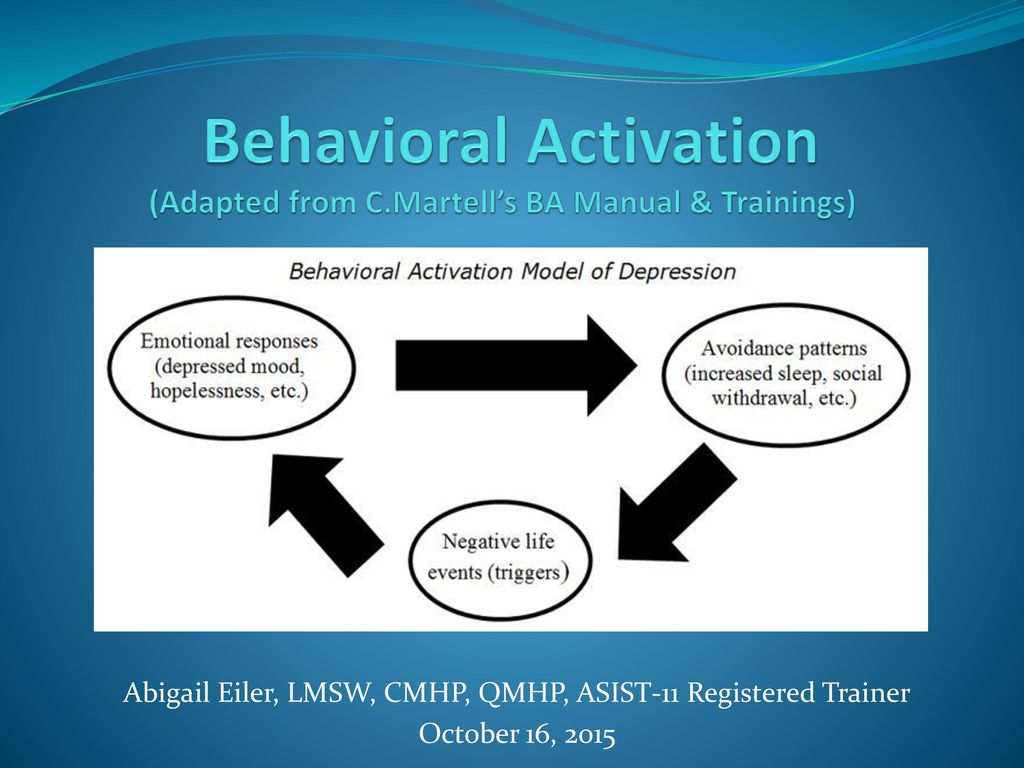
There are two different cycles that can be utilized to show the cycle of Activity and Cycle od Depression.

These are below :


Image result for behavioral activation


In order to avoid going into depression,some key steps need to be followed:


Image result for behavioral activation


Efforts should be made to try to adopt a positive daily activities performance report:


Sunday, 13 October 2019

Psychology Made Simple : How to cope with Stressful Situations

Human life is complex and everyone faces a stressful situation at some time.
This could be a failure in exam,an accident,a death of someone close or some form of bullying / harrassment.

Life in not perfect and everyone has to go through tough times in life to achieve succees,

The key is to cope with the stressful situation adequately and move forward in life.

While there is reported to be an imabalance of chemicals / neurotransmitters in brain during periods of stress and medications do help but the following steps are very useful in order to tackle with a difficult situation :

1.Talk to someone close to you who you trust and discuss about your issues.This could be family or firends

2.Seek advice / support from someone who you have trust in and is more experienced in life / senior to you eg someone in your family : Parents or elder siblings.

3 .Do something that makes you feel better.eg going to a park or a natural resort.

4.Try to assess the damage done.Was there a cause for this event eg some inexperience on your behalf or some bias from someone.?

5.Dont be left alone

6.Think positive and  plan how to get out of this situation.Move ahead and march forward.Going in other directions may prove lethal.

7.Look at the moments of success in your life and feel optimistic that you will overcome this too.8.

8.We are not perfect and not meant to succeed in everything.Failures do happen and should be taken as a step towards success by learning from their causes and how to prevent them again.

9.Try to change the course of your thoughts and get out of the loop / cycle of thoughts of depression.

10 Indulge in some positive / constructive  activity for a longer time period

Wednesday, 31 July 2019

Rheumatology Made Simple : Monoarthritis


Rheumatology Made Simple :  Monoarthritis

Pain and inflammation of a single joint is known as monoarthritis.

Targeted History and examination is important in order to narrow down the differential diagnosis.

Common causes of Monoarthritis include the following :

Trauma


Crystal Arthropathy


Gout / Pseudo Gout


Infections

Seronegative spondyloarthritis


Nonspecific inflammatory conditions,


Neoplasm


Immunologic conditions.


Key steps in developing Differential Diagnosis :

1. Is there any history of trauma.

2.Decide if process is articular or extra articular.,

3.Use clues from history and physical examination to narrow down the differential diagnosis ( Age,Gender,Risk factors,Previous episodes,Family history,Back pain,Travel history
Presence of extra-articular manifestations is particularly useful.

4.Obtain labarotory data .This is unlikely to make a diagnosis in isolation.

5.Joint aspiration is done to analyze synovial fluid to establish diagnosis and guide therapy


Saturday, 1 December 2018

Chemistry Made Simple : Catenation

Join our facebook page for discussions and further good quality learning :
https://www.facebook.com/groups/405813783372378/


Catenation is the bonding of atoms of the same element into a series, called a chain.

A chain or a ring shape may be open if its ends are not bonded to each other (an open-chain compound), or closed if they are bonded in a ring (a cyclic compound).


Catenation occurs most readily with carbon, which forms covalent bonds with other carbon atoms to form longer chains and structures

Image result for catenation images


Image result for catenation images


Related image


Related image


Carbon is most well known for its properties of catenation, with organic chemistry essentially being the study of catenated carbon structures (and known as catenae).

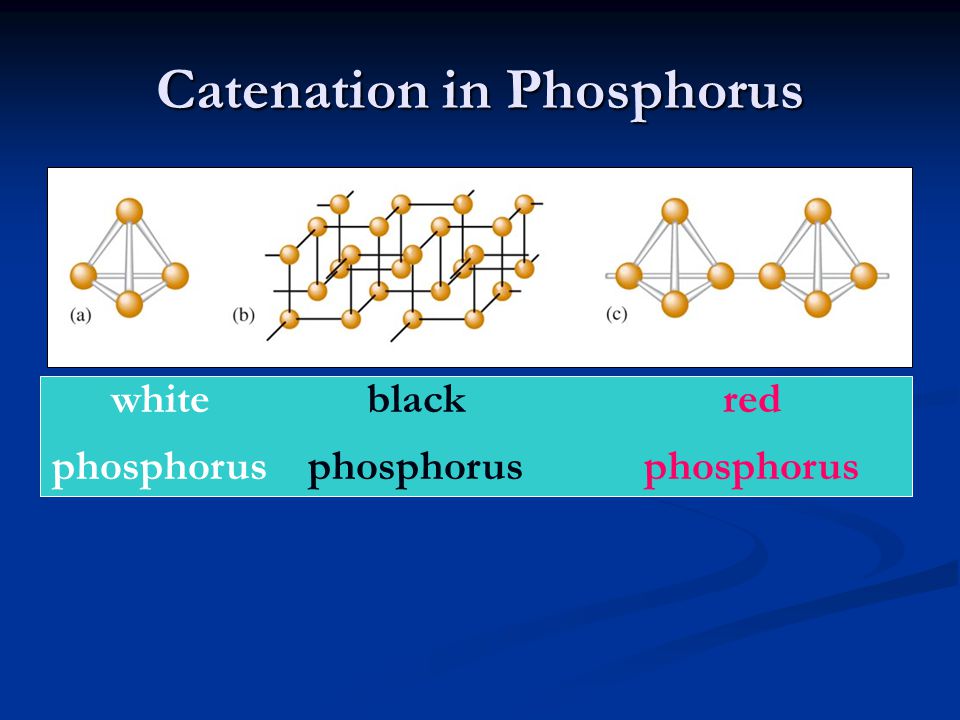
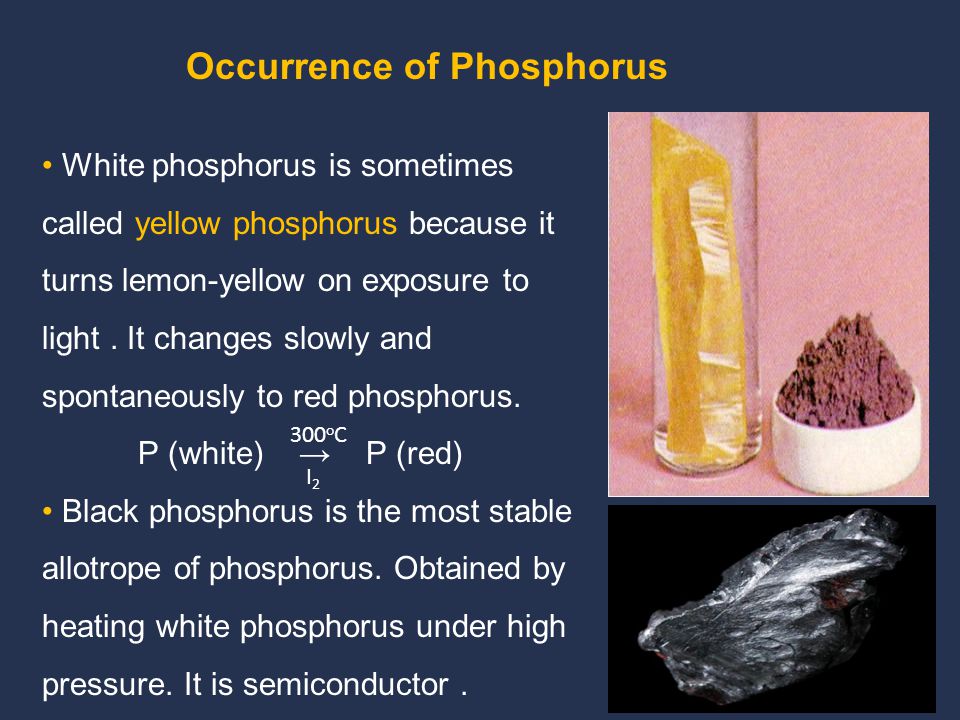
However, carbon is by no means the only element capable of forming such catenae, and several other main-group elements are capable of forming an expansive range of catenae, including silicon, sulphur  boron and phosphorus


Image result for catenation images


Related image


Related image


Related image

Wednesday, 7 November 2018

Pharmacology Made Simple : Antibiotics : Tetracyclines


Pharmacology Made Simple : Antibiotics : Tetracyclines


Join our facebook page for discussions and further good quality learning :
https://www.facebook.com/groups/405813783372378/


Tertracycline:

Tetracycline is in the tetracyclines family of medications. 

It works by blocking the ability of bacteria to make proteins.

Tetracycline was originally made from bacteria of the Streptomyces type.

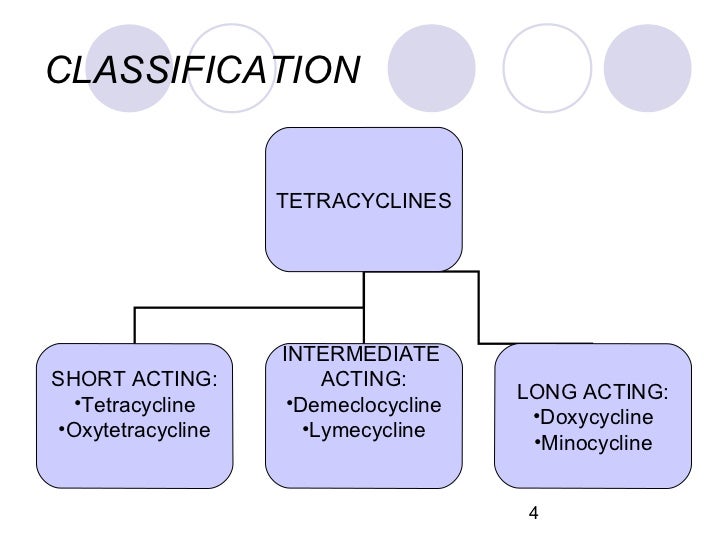
CLASSIFICATION                   TETRACYCLINES                   INTERMEDIATESHORT ACTING:           ACTING:              ...
Mechanism of action:

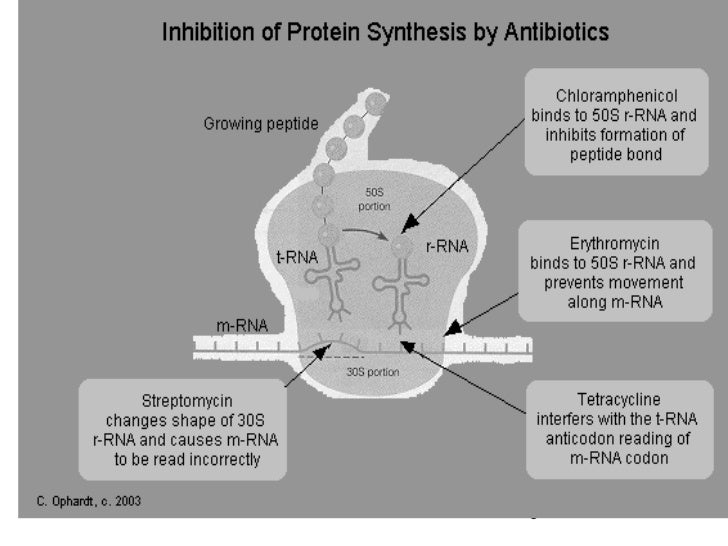
Tetracycline inhibits protein synthesis by blocking the attachment of charged aminoacyl-tRNA to the A site on the ribosome. Tetracycline binds to the 30S subunit of microbial ribosomes. 

Thus, it prevents introduction of new amino acids to the nascent peptide chain.

The action is usually inhibitory and reversible upon withdrawal of the drug. Mammalian cells are less vulnerable to the effect of tetracyclines, despite the fact that tetracycline binds to the small ribosomal subunit of both prokaryotes and eukaryotes (30S and 40S, respectively). 

This is because bacteria actively pump tetracycline into their cytoplasm, even against a concentration gradient, whereas mammalian cells do not. This accounts for the relatively small off-site effect of tetracycline on human cells.
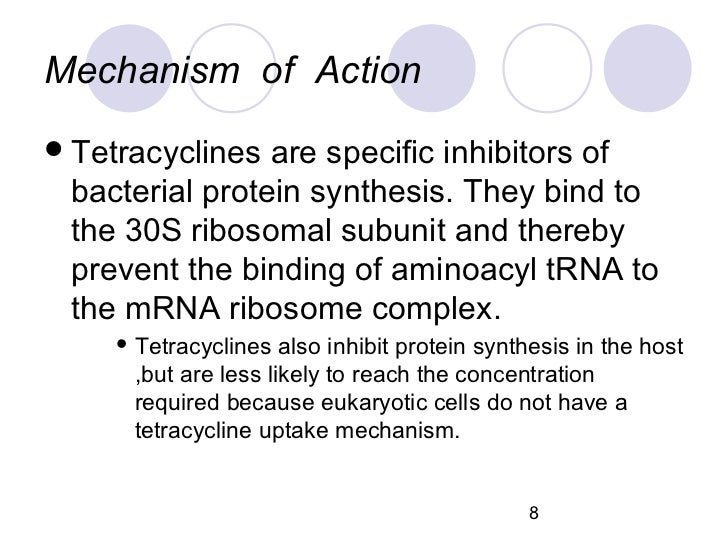
Mechanism of Action Tetracyclines are specific inhibitors of bacterial protein synthesis. They bind to the 30S ribosomal ...

9

Clinical Uses :

Tetracycline is an antibiotic used to treat a number of infections.

This includes acne, cholera, brucellosis, plague, malaria, and syphilis.

It is taken by mouth.
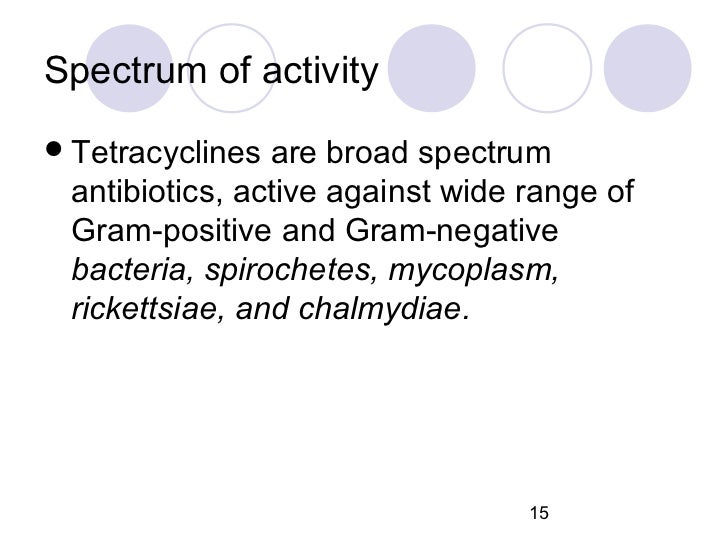
Spectrum of activity Tetracyclines are broad spectrum antibiotics, active against wide range of Gram-positive and Gram-ne...

Side Effects :

Common side effects include vomiting, diarrhea, rash, and loss of appetite.

Other side effects include poor tooth development if used by children less than eight years of age,

kidney problems, and sunburning easily.

Use during pregnancy may harm the baby.

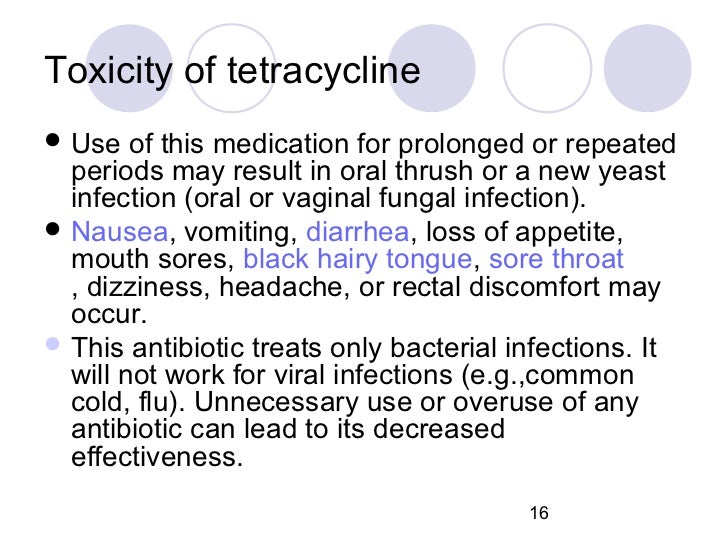
Toxicity of tetracycline Use   of this medication for prolonged or repeated  periods may result in oral thrush or a new y...
Medical uses:

It is first-line therapy for Rocky Mountain spotted fever (Rickettsia),

Lyme disease (B. burgdorferi),

Q fever (Coxiella), psittacosis, and

Mycoplasma pneumoniae and to eradicate nasal carriage of meningococci.

Tetracycline tablets were used in the plague outbreak in India in 1994.

Spectrum of bacterial susceptibility

Tetracyclines have a broad spectrum of antibiotic action.

Originally, they possessed some level of bacteriostatic activity against almost all medically relevant aerobic and anaerobic bacterial genera, both Gram-positive and Gram-negative, with a few exceptions, such as Pseudomonas aeruginosa and Proteus spp., which display intrinsic resistance.

However, acquired (as opposed to inherent) resistance has proliferated in many pathogenic organisms and greatly eroded the formerly vast versatility of this group of antibiotics.

Resistance amongst Staphylococcus spp., Streptococcus spp., Neisseria gonorrhoeae, anaerobes, members of the Enterobacteriaceae, and several other previously sensitive organisms is now quite common.

Tetracyclines remain especially useful in the management of infections by certain obligately intracellular bacterial pathogens such as Chlamydia, Mycoplasma, and Rickettsia.

They are also of value in spirochaetal infections, such as syphilis, leptospirosis, and Lyme disease. Certain rare or exotic infections, including anthrax, plague and brucellosis, are also susceptible to tetracyclines. These agents also have activity against certain eukaryotic parasites, including those responsible for diseases such as malaria and balantidiasis.

Uses of tetracycline Tetracycline is used to treat a wide variety of infections, including acne. It is an antibiotic that...
Precautions:

Discolor permanent teeth (yellow-gray-brown), from prenatal period through childhood and adulthood.

Be inactivated by Ca2+ ions, so are not to be taken with milk, yogurt, and other dairy products.

Be inactivated by aluminium, iron, and zinc, not to be taken at the same time as indigestion remedies (common antacids and over-the-counter heartburn medicines).

Cause skin photosensitivity, so exposure to the sun or intense light is not recommended.

Cause drug-induced lupus, and hepatitis.

Cause microvesicular fatty liver.

Cause tinnitus.

Interfere with methotrexate by displacing it from the various protein-binding sites.

Cause breathing complications, as well as anaphylactic shock, in some individuals.

Affect bone growth of the fetus, so should be avoided during pregnancy.

Fanconi syndrome may result from ingesting expired tetracyclines.

Caution should be exercised in long-term use when breastfeeding. Short-term use is safe.

Tuesday, 16 October 2018

Pharmacology Made Simple : Antihypertensives : Enalapril

Enalapril

Join our facebook page for discussions and further good quality learning :
https://www.facebook.com/groups/405813783372378/


Enalapril,is a medication that belongs to the angiotensin-converting-enzyme inhibitor (ACEi) family of medications. used to treat high blood pressure, diabetic kidney disease, and heart failure.

For heart failure it is generally used with a diuretic such as furosemide.

Image result for enalapril mechanism of action images

Mechanism of action


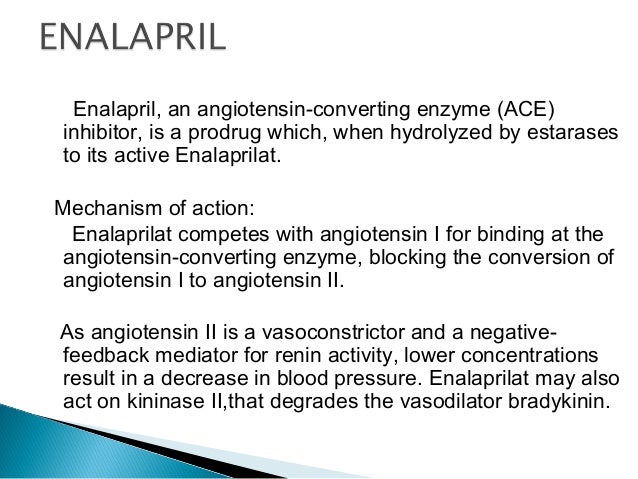
Normally, angiotensin I is converted to angiotensin II by an angiotensin-converting enzyme (ACE). Angiotensin II constricts blood vessels, increasing blood pressure.

Enalaprilat, the active metabolite of enalapril, inhibits ACE. Inhibition of ACE decreases levels of angiotensin II leading to less vasoconstriction and decreased blood pressure.

Image result for enalapril mechanism of action images

Pharmacokinetics

Pharmacokinetic data of enalapril:

Onset of action: about 1 hour
Peak effect: 4–6 hours
Duration: 12–24 hours
Absorption: ~60%
Metabolism: prodrug, undergoes biotransformation to enalaprilat.

Image result for enalapril mechanism of action images

Route of administration :

It is given by mouth or injection into a vein.

Onset of effects are typically within an hour when taken by mouth and last for up to day.

Medical uses

Enalapril is used to treat hypertension, symptomatic heart failure, and asymptomatic left ventricular dysfunction.

It has been proven to protect the function of the kidneys in hypertension, heart failure, and diabetes, and may be used in the absence of hypertension for its kidney protective effects.

It is widely used in chronic kidney failure.

Furthermore, enalapril is an emerging treatment for psychogenic polydipsia.

A double-blind, placebo-controlled trial showed that when used for this purpose, enalapril led to decreased water consumption (determined by urine output and osmality) in 60% of patients.

Image result for enalapril mechanism of action images

.
Side effects

Common side effects include headache, tiredness, lightheadedness with standing, and cough.

Serious side effects include angioedema and low blood pressure.

Use during pregnancy is believed to result in harm to the baby.

The most common side effects of enalapril include increased serum creatinine (20%), dizziness (2–8%), low blood pressure (1–7%), syncope (2%), and dry cough (1–2%).

The most serious common adverse event is angioedema (swelling) (0.68%) which often affects the face and lips, endangering the patient’s airway.

Angioedema can occur at any point during treatment with enalapril, but is most common after the first few doses.

.


Enalaprilat was developed partly to overcome these limitations of captopril. The sulfhydryl moiety was replaced by a carboxylate moiety, but additional modifications were required in its structure-based design to achieve a potency similar to captopril. Enalaprilat, however, had a problem of its own in that it had poor oral availability. This was overcome by the researchers at Merck by the esterification of enalaprilat with ethanol to produce enalapril.