Join our facebook page for discussions and further good quality learning :
https://www.facebook.com/groups/405813783372378/
Pharmacology Made Simple : Polysaccharide Iron Complex
Polysaccharide Iron Complex (PIC) is available in capsules of 150 mg.
They are excellent choice for treatment of iron deficiency anemia in pregnancy.
After treatment with PIC , clinical parameters such as red blood cell count,hemoglobin and haematocit improved significantly.
After 8 weeks of treatment with PIC 300 mg ,in a patient with Anemia ,the net increase in Hb of 9.5 mg/dl was by 2.6 mg / dl and haematocrit of 30.3 % was by 6.3 %.
Usual adult dose of Polysaccharide Iron complex is 150 mg capsule 1 to 2 daily and can be taken regardless of meal.
For patients having difficulty in swallowing of capsules,the PIC capsule can be opened and the powder can be diluted in liquid or sprinkled on food.
This medication is an iron supplement used to treat or prevent low blood levels of iron (e.g., for anemia or during pregnancy). Iron is an important mineral that the body needs to produce red blood cells and keep you in good health.
How to use Polysaccharide Iron 150
Iron is best absorbed on an empty stomach (usually if taken 1 hour before or 2 hours after meals). If stomach upset occurs, you may take this medication with food. Avoid taking antacids, dairy products, tea.
Side Effects
Constipation, diarrhea, stomach cramps, or upset stomach may occur. These effects are usually temporary and may disappear as your body adjusts to this medication.
Iron may cause your stools to turn black, an effect that is not harmful.
A very serious allergic reaction to this drug is rare. However, seek immediate medical attention if you notice any of the following symptoms of a serious allergic reaction: rash, itching/swelling (especially of the face/tongue/throat), severe dizziness, trouble breathing.
Precautions
This medication should not be used if you have certain medical conditions. Before taking this medication, consult your doctor or pharmacist if you have: iron overload disorder (e.g., hemochromatosis, hemosiderosis).
Before taking this medication, tell your doctor or pharmacist your medical history, especially of: use/abuse of alcohol, liver problems, stomach/intestinal problems (e.g., ulcer, colitis).
If your brand of iron supplement also contains folic acid, be sure to tell your doctor or pharmacist if you have vitamin B12 deficiency (pernicious anemia) before taking it.
Folic acid may falsely improve certain laboratory tests for vitamin B12 deficiency without actually treating this anemia. Untreated vitamin B12 deficiency may result in serious nerve problems (e.g., peripheral neuropathy symptoms such as numbness/pain/tingling sensations).
Chewable tablets of this medicine may contain aspartame. If you have phenylketonuria (PKU) or any other condition that requires you to restrict your intake of aspartame (or phenylalanine), consult your doctor or pharmacist about using this drug safely.
Liquid preparations of this product may contain sugar and/or alcohol. Caution is advised if you have diabetes, alcohol dependence, or liver disease.
During pregnancy, this medication should be used only when clearly needed.
This medication passes into breast milk. Consult your doctor before breast-feeding.
Interactions
Before taking this medication, tell your doctor or pharmacist of all prescription and nonprescription/herbal products you may use, especially: certain antibiotics (e.g., penicillamine, chloramphenicol, quinolones such as ciprofloxacin/norfloxacin), bisphosphonates (e.g., alendronate), levodopa, methyldopa, thyroid replacement drugs (e.g., levothyroxine).
Avoid taking this medication at the same time as antacids or tetracycline antibiotics. Wait at least 2 hours between taking this medication and an antacid or tetracycline.
If your brand of iron also contains folic acid, be sure to tell your doctor or pharmacist if you take certain anti-seizure drugs (e.g., hydantoins such as phenytoin).
This medication may interfere with certain laboratory tests (e.g., fecal occult blood tests), possibly causing false test results. Make sure laboratory personnel and all your doctors know you use this drug.
This document does not contain all possible interactions. Therefore, before using this product, tell your doctor or pharmacist of all the products you use. Keep a list of all your medications with you, and share the list with your doctor and pharmacist.
Saturday, 10 March 2018

Friday, 2 March 2018
Pharmacology Made Simple : Erythromycin
Join our facebook page for discussions and further good quality learning :
https://www.facebook.com/groups/405813783372378/
Pharmacology Made Simple : Erythromycin
Erythromycin is an antibiotic useful for the treatment of a number of bacterial infections.
https://www.facebook.com/groups/405813783372378/
Pharmacology Made Simple : Erythromycin
Erythromycin is an antibiotic useful for the treatment of a number of bacterial infections.
This includes respiratory tract infections, skin
infections, chlamydia infections, pelvic inflammatory disease, and syphilis.
It
may also be used during pregnancy to prevent Group B streptococcal infection in
the newborn.
Erythromycin may be used to improve delayed stomach emptying. It
can be given intravenously and by mouth.
An eye ointment is routinely recommended after delivery to
prevent eye infections in the newborn.
Mechanism of Action :
Erythromycin displays bacteriostatic activity or inhibits
growth of bacteria, especially at higher concentrations .It binds to the 50s
subunit of the bacterial rRNA complex, protein synthesis and subsequent
structure and function processes critical for life or replication are
inhibited.
Erythromycin interferes with aminoacyl translocation,
preventing the transfer of the tRNA bound at the A site of the rRNA complex to
the P site of the rRNA complex. Without this translocation, the A site remains
occupied, thus the addition of an incoming tRNA and its attached amino acid to
the nascent polypeptide chain is inhibited.
This interferes with the production
of functionally useful proteins, which is the basis of this antimicrobial
action.
Side Effects:
It is generally safe in those who are allergic to
penicillin.
Erythromycin also appears to be safe to use during
pregnancy.While generally regarded as safe during breastfeeding its use by the
mother during the first two weeks of life may increase the risk of pyloric
stenosis in the baby.
Common side effects include abdominal cramps, vomiting, and
diarrhea. More serious side effects may include Clostridium difficilecolitis,
liver problems, prolonged QT, and allergic reactions.
This risk also applies if taken directly by the baby during
this age.
It is in the macrolide family and works by decreasing
bacterial protein production.
Interactions:
Erythromycin is metabolized by enzymes of the cytochrome
P450 system, in particular, by isozymes of the CYP3A superfamily, CYP3A.
The activity of the CYP3A enzymes can be induced or
inhibited by certain drugs (e.g. dexamethasone) which can cause it to affect
the metabolism of many different drugs, e.g. erythromycin. If other CYP3A
substrates — drugs that are broken down by CYP3A such as simvastatin (Zocor), lovastatin
(Mevacor), or atorvastatin (Lipitor)—are taken concomitantly with erythromycin,
levels of the substrates increase, often causing adverse effects.
A noted drug interaction involves erythromycin and
simvastatin, resulting in increased simvastatin levels and the potential for
rhabdomyolysis. Another group of CYP3A4 substrates are drugs used for migraine
such as ergotamine and dihydroergotamine; their adverse effects may be more
pronounced if erythromycin is associated.
Earlier case reports on sudden death prompted a study on a
large cohort that confirmed a link
between erythromycin, ventricular tachycardia,
and sudden cardiac death in patients also taking drugs that prolong the
metabolism of erythromycin (like verapamil or diltiazem) by interfering with
CYP3A4.
Hence, erythromycin should not be administered to people
using these drugs, or drugs that also prolong the QT interval. Other examples
include terfenadine (Seldane, Seldane-D), astemizole (Hismanal), cisapride
(Propulsid, withdrawn in many countries for prolonging the QT time) and
pimozide (Orap). Theophylline, which is used mostly in asthma, is also
contraindicated.
Erythromycin and doxycycline can have a synergistic effect
when combined and kill bacteria (E. coli) with a higher potency than the sum of
the two drugs together.
This synergistic relationship is only temporary. After
approximately 72 hours, the relationship shifts to become antagonistic, whereby
a 50/50 combination of the two drugs kills less bacteria than if the two drugs
were administered separately.
Friday, 23 February 2018
Pharmacology Made Simple : Telmisartan
Telmisartan
Telmisartan is an angiotensin II receptor antagonist (angiotensin receptor blocker, ARB) used in the management of hypertension. It was discovered by Boehringer Ingelheim.
Telmisartan is indicated in the treatment of essential hypertension.
Mechanism of Action :
Telmisartan is an angiotensin II receptor blocker that shows high affinity for the angiotensin II receptor type 1 (AT1), with a binding affinity 3000 times greater for AT1 than AT2.
In addition to blocking the RAS, telmisartan acts as a selective modulator of peroxisome proliferator-activated receptor gamma (PPAR-γ), a central regulator of insulin and glucose metabolism. It is believed that telmisartan's dual mode of action may provide protective benefits against the vascular and renal damage caused by diabetes and cardiovascular disease (CVD)
24 hour blood pressure correlates most closely with Target Organ Damage.
Highest incidence of cardiovascular events occurs in early morning hours when blood pressure remains elevated at night.
Blood pressure variability is an independent determinant of Target Organ Damage.
Temisartan contains longest half life among available Angiotensin receptor blockers.
Its half life is 24 hour plasma half life.
The long plasma half life ensures that the anti-hypertensive efficacy is maintained for the full 24 hour dosing interval including the early morning hours.
Telmisartan + Hydrochlorothiazide has powerful 24 hour systolic blood pressure reduction compared with Amlodipine and hydrochlorothiazide.
Telmisartan + Hhydrochlorothiazide provides 24 hour consistent BP control in obese hypertensive patients with type 2 diabetes.
Telmisartan provides better control even in risky early mornings.
Beyond BP reduction, telmisartan also secures from target organ damage.
It also displays cardio protective benefits including LVH and improving cardiac function following cardiac ischemia.
It also provides cerebroprotection as it can penetrate blood brain barrier
Renoprotection by promoting water and sodium excretion without affecting potassium or creatinine excretion in hypertensives.
Telmisartan provides 24 hours consistent BP control in obese hypertensive patients with type 2 diabetes.
Contraindications
Telmisartan is contraindicated during pregnancy. Like other drugs affecting the renin–angiotensin system (RAS), telmisartan can cause birth defects, stillbirths, and neonatal deaths. It is not known whether the drug passes into the breast milk. Also it is contraindicated in bilateral renal artery stenosis in which it can cause renal failure.
Side effects
Side effects are similar to other angiotensin II receptor antagonists and include tachycardia and bradycardia (fast or slow heartbeat), hypotension (low blood pressure), edema (swelling of arms, legs, lips, tongue, or throat, the latter leading to breathing problems), and allergic reactions.
Interactions
Due to its mechanism of action, telmisartan increases blood potassium levels. Combination with potassium preparations or potassium-sparing diuretics could cause hyperkalaemia (excessive potassium levels). Combination with NSAIDs, especially in patients with impaired kidney function, has a risk of causing (usually reversible) kidney failure.
Wednesday, 14 February 2018
Pharmacology Made Simple : Bosentan Monohydrate
Bosentan
Introduction:
Bosentan is a dual endothelin receptor antagonist used in the treatment of pulmonary artery hypertension (PAH).
Mechanism of Action :
Bosentan is a competitive antagonist of endothelin-1 at the endothelin-A (ET-A) and endothelin-B (ET-B) receptors. Under normal conditions, endothelin-1 binding of ET-A or ET-B receptors causes constriction of the pulmonary blood vessels. By blocking this interaction, bosentan decreases pulmonary vascular resistance
Uses :
Bosentan is recommended as fist line therapy for PAH : Pulmonary Arterial Hypertension.
It efficiently improves exercise tolerance and patients quality of life.
There is improved survival rate in PAH patients on long term treatment.
Also,progression of PAH is stopped effectively by use of Bosentan.
It improves functional class (QoL) on long term use.
It is available as 62.5 and 125 mg tablets.
Side Effects:
In addition to the risk of causing birth defects and of causing liver damage, bosentan has a high risk of causing edema, pulmonary veno-occlusive disease, decreasing sperm counts, and decreases in hemoglobin and hematocrit.
Very common adverse effects (occurring in more than 10% of people) include headache, elevated transaminases, and edema.
Common adverse effects (between 1% and 10% of people) include anemia, reduced hemoglobin, hypersensitivity reactions, skin inflammation, itchiness, rashes, red skin, flushing, fainting, heart palpitations, low blood pressure, nasal congestion, gastro-esophageal reflux disease, and diarrhea.


Introduction:
Bosentan is a dual endothelin receptor antagonist used in the treatment of pulmonary artery hypertension (PAH).
Mechanism of Action :
Bosentan is a competitive antagonist of endothelin-1 at the endothelin-A (ET-A) and endothelin-B (ET-B) receptors. Under normal conditions, endothelin-1 binding of ET-A or ET-B receptors causes constriction of the pulmonary blood vessels. By blocking this interaction, bosentan decreases pulmonary vascular resistance
Uses :
Bosentan is used to treat people with moderate pulmonary arterial hypertension and to reduce the number of digital ulcers — open wounds on especially on fingertips and less commonly the knuckles in people with systemic scleroderma.
It efficiently improves exercise tolerance and patients quality of life.
There is improved survival rate in PAH patients on long term treatment.
Also,progression of PAH is stopped effectively by use of Bosentan.
It improves functional class (QoL) on long term use.
It is available as 62.5 and 125 mg tablets.
Side Effects:
In addition to the risk of causing birth defects and of causing liver damage, bosentan has a high risk of causing edema, pulmonary veno-occlusive disease, decreasing sperm counts, and decreases in hemoglobin and hematocrit.
Very common adverse effects (occurring in more than 10% of people) include headache, elevated transaminases, and edema.
Common adverse effects (between 1% and 10% of people) include anemia, reduced hemoglobin, hypersensitivity reactions, skin inflammation, itchiness, rashes, red skin, flushing, fainting, heart palpitations, low blood pressure, nasal congestion, gastro-esophageal reflux disease, and diarrhea.
Friday, 2 February 2018
Haematology Made Simple : Hereditary Spherocytosis
Hereditary Spherocytosis is an autosomal dominant disorder.
It is characterized by lack of spectrin in the red cell membrane which cases the cells to become spheres instead of being normal,flexible and durable biconcave discs.
The poorly flexible spherical cells are thus unable to pass through small fenestrations in the splenic red pulp and hemolysis takes place when the red cells are trapped within the spleen.
The treatment for most patients include : supportive care with oral folic acid and blood transfusions during periods of severe anemia.
Splenectomy is considered if patients have modrate to severe spherocytosis or are refractory to medical treatment.
However splenectomy is associated with severe sepsis risk upto 30 years after the procedure with encapsulated bacteria,most common being Streptococcus pneumoniae although it will abolish the risk of life threatening anemia and regular blood transfusons.
To avoid this risk of sepsis, anti pneumococcal,Haemophilus and meningococcal vaccines should be given several weeks before the procedure.
Sunday, 21 January 2018
Pharmacology Made Simple : Antimicrobials : Cefexime
Salmonella and Shigella case significant mobidity and motality among children woldwide
Increased microbial resistance reslts in greater burden of disease.
Cefexime and Typhoid Fever:
Typhoid continues to pose a challenge even 100 years after its discovery.
Typhoid is a common cause of morbidity among young children worldwide including children below 2 years of age.
Cefexime exhibits low MIC 90 and high concentration against Typhoid fever.
MIC 90 against Salmonella typhi : 0.25 micrograms/ml2
Mean concentration in bile : 199.3 micrograms/ml3
Cefexime effectively treats MDR and NMDR Typhoid Fever with High Cure Rates.
Cefexime shows significant clinical efficacy of around 100 % with low rates of relapse.
Cefexime in Shigellosis Management :
Shigellosis is primarily a childhood disease in both developed and developing countries.
Over 163.2 million cases are reported in developing countries.
Cefexime exhibits low MIC 90 against Shigella species.
Cefexime is effective in treatmemt of suspected shigellosis in areas of high resistance to co-trimoxazole.
Thursday, 18 January 2018
Pharmacology Made Simple : Oral Hypoglycemics : Combination of Sitagliptin and Metformin
Combination of Sitagliptin and Metformin 50 mg / 500 mg :
A combination of Sitagliptin and Metformin 50 mg / 500 mg produces a greater reduction in HbA1c compared to Metformin alone.
A substantial number of patients : 49.2 % in the Sitagliptin =+ Metformin FDC group had an HbA1c < 7.0 % at week 18 as compared with 34.2% in Metformin monotherapy group.
31.8 % of patients with Sitagliptin - Metformin FDC Group achieved an HbA1c of < 6.5 % compared with 16.0 % in Metformin monotherapy group.
Treatment with Sitagliptin - Metformin FDC results in lower incidence of abdominal pain and diarrhea compared with Metformin monotherapy.
This combination improves glycemic control as well as beta cell function.
Sitagliptin - Metformin combination compared with Glipizide- Metformin combination led to better maintenance of Beta cell function after 2 years of treatment.
Disposition Index : an assessment of Beta cell responsiveness in relation to insulin sensitivity remained stable over 2 years with Sitagliptin - Metformin but declined from baseline with Glipizide - Metformin.

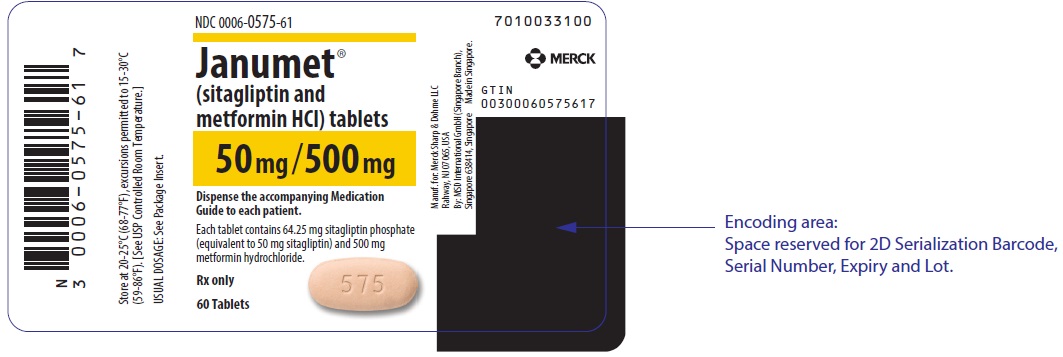
A combination of Sitagliptin and Metformin 50 mg / 500 mg produces a greater reduction in HbA1c compared to Metformin alone.
A substantial number of patients : 49.2 % in the Sitagliptin =+ Metformin FDC group had an HbA1c < 7.0 % at week 18 as compared with 34.2% in Metformin monotherapy group.
31.8 % of patients with Sitagliptin - Metformin FDC Group achieved an HbA1c of < 6.5 % compared with 16.0 % in Metformin monotherapy group.
Treatment with Sitagliptin - Metformin FDC results in lower incidence of abdominal pain and diarrhea compared with Metformin monotherapy.
This combination improves glycemic control as well as beta cell function.
Sitagliptin - Metformin combination compared with Glipizide- Metformin combination led to better maintenance of Beta cell function after 2 years of treatment.
Disposition Index : an assessment of Beta cell responsiveness in relation to insulin sensitivity remained stable over 2 years with Sitagliptin - Metformin but declined from baseline with Glipizide - Metformin.
Subscribe to:
Posts (Atom)